
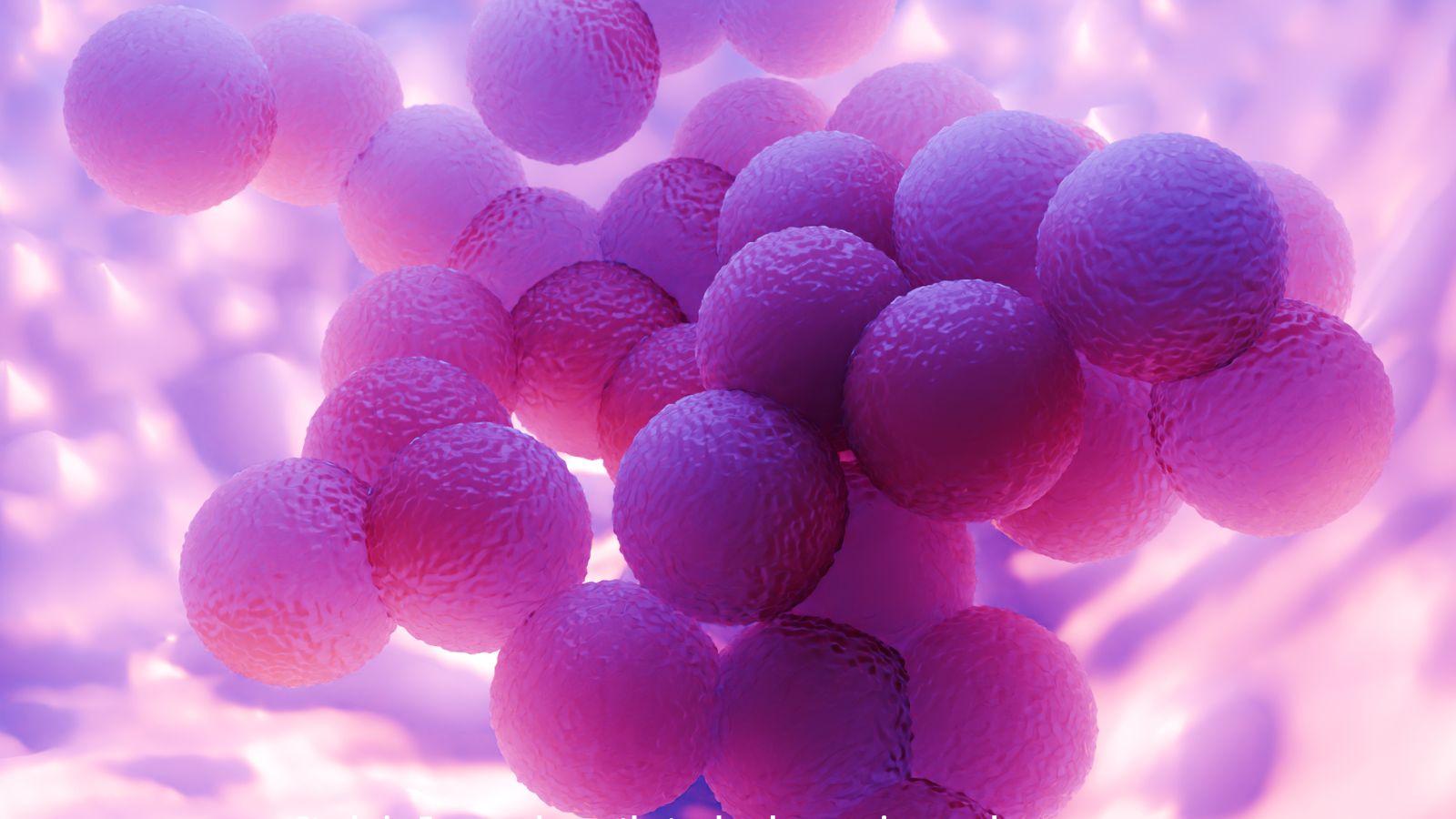
An innovative strategy aims to modulate human cells rather than bacteria, creating opportunities for new treatments in a landscape increasingly challenged by multidrug-resistant strains.
Launched in December 2025, the Institut Pasteur in São Paulo (IPSP) implemented a high-throughput, image-based screening platform capable of testing thousands of compounds simultaneously and automatically measuring how each one influences bacterial infection dynamics, eliminating operator bias from the process. The project, centered on Staphylococcus aureus, is led by researcher Caio Haddad Franco, selected under the cooperation agreement between FAPESP and the Institut Pasteur de Paris, which will fund the activities for the next four years through the so-called G4 Groups program.
Around 2,000 compounds will be tested, prioritizing natural products derived from Brazilian biodiversity — a strategic source rich in novel and highly bioactive chemical structures. Franco notes that nearly 70% of drugs approved worldwide between 1980 and 2019 were either derived from or inspired by natural products, highlighting the strong potential of this approach.
Paradigm shift – The project inaugurates an emerging strategy at IPSP for pathogens such as Staphylococcus aureus: instead of targeting the bacteria directly, the goal is to interfere with the cellular processes it uses to invade, survive, multiply, and persist within human cells. It is an alternative approach that acts directly on the host, testing a broad variety of compounds, without previously choosing a specific cellular target — first selecting the most promising compounds that alter infection patterns in cells and then investigating the molecular mechanism associated with the observed phenotype.
“The focus of the project is not the bacteria itself, but the host cell mechanisms and structures that it subverts to survive inside human cells. We are searching for compounds that block S. aureus invasion, replication, or survival inside cells — key factors in chronic and hard-to-treat infections.”
The pipeline will have two complementary stages. In the primary screening, the compounds will be tested on infected human cells to identify those that interfere with intracellular infection. Then, the same set of compounds will be evaluated in a secondary screening on the isolated bacteria. This second stage allows researchers to distinguish compounds that act as conventional antibiotics from those that modulate the host cell. Subsequently, confirmatory assays and mechanism-of-action studies with selected compounds will serve as a basis for advancing the most promising candidates to animal model testing.
The S. aureus challenge – Over the past 20 years, research has shown that Staphylococcus aureus — previously considered an essentially extracellular pathogen — can invade human cells and take advantage of its inner environment as a protected reservoir. Intracellular persistence is associated with both the difficulty of eradication and the chronicity of infections, since many antibiotics do not penetrate cells or do so in limited concentrations.
Caio Franco’s approach aims to address this specific gap by targeting host processes that support invasion and survival, enhancing the effectiveness of standard antibiotics and lowering the chance of resistance developing.
“Staphylococcus Aureus is a bacterium commonly found on the skin and in the nose that causes mild to severe infections, such as pneumonia and sepsis. Although historically associated with the hospital environment, it now circulates in the broader community as well. “The combination of widespread dissemination of resistant bacteria and increasing antimicrobial resistance makes the scenario particularly worrying”, Franco points out.
“This pathogen is one of the bacteria that most contributes to mortality and morbidity in the world, and one that creates most concern in the emergence of multidrug-resistant variants. In some cases, strains are so resistant that they already behave like so-called superbugs – bacteria that are resistant to virtually all available antibiotics — a scenario of extreme concern from a clinical and public health standpoint,” says Franco.
Academic trajectory – With 14 years of experience in drug discovery and high-throughput screening, Caio Haddad Franco has built a career that combines cutting-edge technology and research in infectious diseases. Holding a B.A. in Bioprocess Engineering from UNESP-Assis, he began his international career during his undergraduate studies, through an internship at the Institut Pasteur Korea, working on compound screening to treat protozoa – which led him directly to a doctorate at LNBio/CNPEM, in partnership with Unifesp, where he focused on the discovery of new drugs to treat Chagas disease. During this period, he also had the opportunity to join a European consortium aimed at performing the largest screening of natural compounds ever done against neglected tropical diseases.
Afterwards, he completed a postdoctoral fellowship at ICB-USP in collaboration with Eurofarma, developing screening models for molecules aimed at treating bacterial infections associated with biofilm formation. Since 2019, at the University of Coimbra, he has been conducting advanced research into intracellular infection mechanisms by S. aureus and Salmonella, using RNA interference technologies and high-content microscopy.
“Having worked with screening since my undergraduate studies I was able to study different pathogens, technologies, and approaches. I am now applying this expertise to build a sustainable, collaborative and creative platform at IPSP that is capable of competing in innovation with international centers,” he says.