
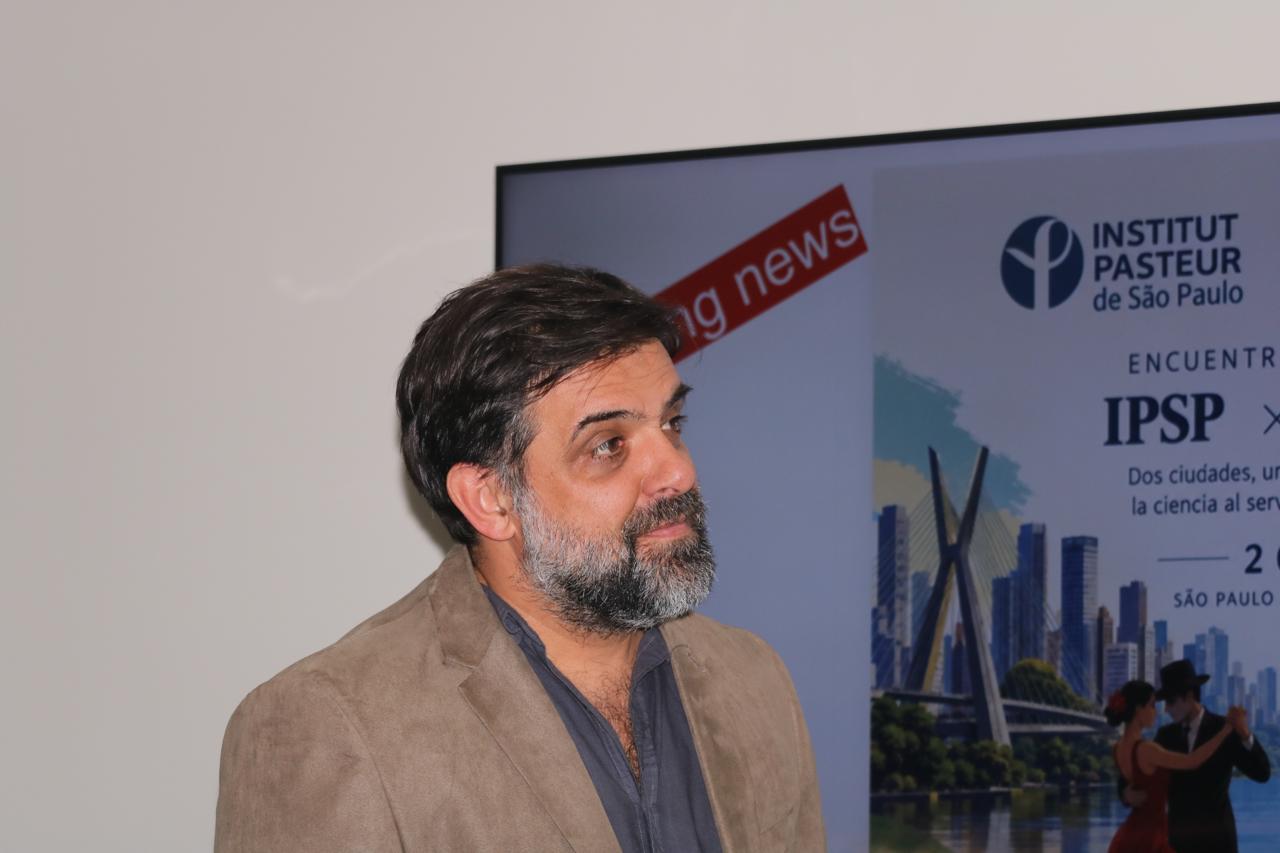
A drug candidate for obesity already tested in humans, a molecule with antiviral potential against respiratory syncytial virus, and new approaches to overcoming the persistence of Trypanosoma cruzi were among the highlights of the third day of the IPSP & IPMon – A Pasteurean Scientific Meeting.
A molecule developed from studies of energy metabolism that has already moved from the laboratory bench into initial testing in humans was one of the highlights of the third and final day of the IPSP & IPMon – A Pasteurean Scientific Meeting.
Held at the International Diffusion Center of the University of São Paulo (USP), the meeting brought together researchers from the Institut Pasteur de São Paulo (IPSP) and the Institut Pasteur de Montevideo (IPMon). The day’s program focused on therapeutics discovery, research platforms, and translational innovation.
A new approach to obesity
The case was presented by Carlos Escande, from the Institut Pasteur de Montevideo, who described the trajectory of MVD-1, initially called SANA, and EOLO Pharma. The project began when researchers were searching for compounds capable of reducing inflammation associated with obesity. In experiments with mice, however, one of the molecules produced an unexpected result: in addition to its metabolic effects, the animals lost weight. The team decided to investigate the finding and observed improvements in obesity- and metabolic syndrome-related alterations, including glucose intolerance and liver abnormalities.
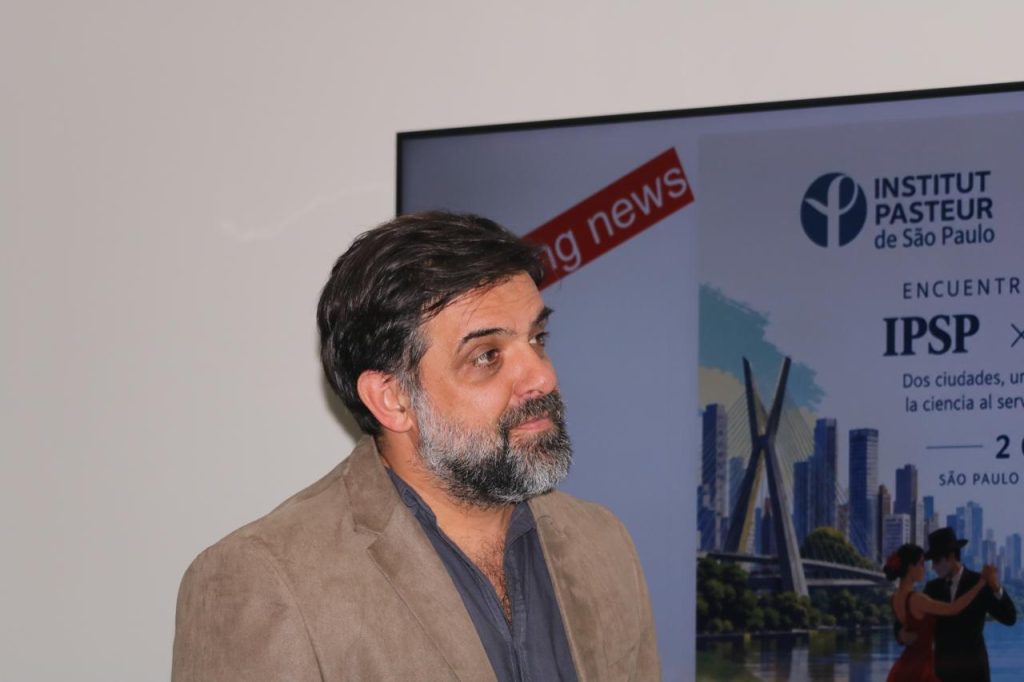
Carlos Escande (IPMon)
Investigation of the mechanism of action showed that the molecule increases energy expenditure through heat production and dissipation. After initially exploring the classical pathway associated with UCP1, the group identified, with the aid of proteomic analyses, the involvement of a creatine-dependent thermogenesis pathway. According to Escande, the work was the first to demonstrate a drug capable of activating and regulating this pathway.
The molecule then progressed through preclinical studies and reached a phase 1 clinical trial. The main objective at this stage was to assess safety and tolerability, but the study also identified an initial signal of efficacy: participants with overweight or obesity showed weight reduction after two weeks of treatment. Escande emphasized that the study was small and of short duration. The company is now working toward phase 2 in a landscape that has changed substantially since the project began, following the introduction of GLP-1 agonists. The new strategy includes evaluating MVD-1 on its own and, depending on available resources, also in combination with incretin-based therapies.
New strategies against RSV and Chagas disease
Another study that drew attention was presented by Mario Lopes, from Edison Durigon’s group at IPSP. Lopes presented results involving APD, a phthalocyanine derivative being investigated against respiratory syncytial virus (RSV), an important cause of bronchiolitis in infants and young children. Current immunization strategies against RSV focus on pregnant women and older adults, but there are no antivirals specifically licensed for treating the infection.
In in vitro experiments, APD reduced infection and the cytopathic effect caused by the virus without showing significant toxicity at the concentrations studied. The molecule showed greater activity when added at the beginning of infection, leading the group to investigate whether it might interfere with viral entry into the cell.
Computational analyses suggested a possible interaction between APD and the RSV F protein, which is responsible for the fusion of the virus with the host cell. The hypothesis is that the molecule stabilizes the protein in a conformation that prevents this fusion. The mechanism, however, still needs to be confirmed experimentally. The next steps include specific fusion assays, tests to determine whether APD physically binds to the F protein, and in vivo studies in mice.
The search for drugs capable of addressing another challenge for which there is still no satisfactory solution was also at the center of the presentation by Carolina Moraes, from IPSP and the School of Pharmaceutical Sciences at USP (FCF-USP). Moraes presented the drug discovery platform for Chagas disease developed at USP, which combines high-content screening, different Trypanosoma cruzi strains, animal models, and investigation of the mechanisms of action of compounds.
One of the group’s current focuses is on so-called persistent parasites, forms of T. cruzi that can temporarily survive exposure to drugs. Unlike conventional resistance, this does not necessarily involve a permanent genetic alteration: once drug pressure is removed, these parasites can resume growth and remain sensitive to the drug. Because they replicate slowly or remain quiescent, they are difficult to eliminate and have been identified as one of the possible factors associated with treatment failure in Chagas disease.
The group is developing methods to identify and study these forms in the laboratory so that compounds can eventually be screened directly against them. At the same time, the researchers are taking the reverse approach: starting with molecules that have already shown activity against T. cruzi and investigating how they kill the parasite and which targets they act on. To do this, they analyze genetic and molecular changes associated with the parasite’s response to the compounds.
New platforms for drug discovery
Also focused on the discovery of new antimicrobials, Caio Franco’s presentation, from IPSP, described the implementation of a high-content screening platform to study intracellular bacterial infections, initially using Staphylococcus aureus. The approach addresses a less explored aspect of this bacterium: its ability to invade and persist inside cells, where it can evade the immune response and become less accessible to conventional antibiotics.
Among the strategies being explored are host-directed therapies, which seek to modify processes within the host cell itself in order to make bacterial survival more difficult. The project being established at IPSP is expected to focus primarily on natural products, taking advantage of the country’s biodiversity. Following a pilot stage, the plan is to expand to a library of at least 2,000 compounds and evaluate candidates against both intracellular bacteria and their planktonic form.
Marcelo Comini, from the Institut Pasteur de Montevideo, presented a combination of drug discovery strategies based on predefined molecular targets and phenotypic analyses. His group works mainly with trypanosomatids and redox metabolism, exploring differences between parasite and host metabolic pathways as potential points for therapeutic intervention.
Among the tools used are genetically encoded biosensors, which make it possible to monitor changes in the cellular redox state in real time and rapidly investigate the mechanisms of action of drug candidates.
Comini also highlighted the increase in scale made possible by automation. In collaboration with Institut Pasteur Korea, more than 50,000 compounds were evaluated in an automated high-throughput screening campaign — work that, according to him, would have taken years if performed manually.
When chemistry and infrastructure become part of the equation
Medicinal chemistry and sustainability entered the discussion with Virginia López, from the Institut Pasteur de Montevideo. She presented a platform designed to serve as a bridge between biological questions and chemical tools. The system combines multicomponent reactions to rapidly generate focused libraries of small molecules, biomass-derived raw materials, and early assessments of the compounds’ pharmacological properties.
The approach also incorporates ecotoxicity and biodegradability criteria from the earliest stages. According to López, from a One Health perspective, the efficacy of a molecule for human or animal health should be considered alongside its persistence and potential environmental impacts. The process is iterative: biological results guide new chemical modifications, and the new molecules return to testing in successive optimization cycles.
The infrastructure needed to ensure that this type of research produces comparable and reproducible data was the focus of Mariela Bollati, from the Institut Pasteur de Montevideo. In presenting the Cell Biology Unit, Bollati argued that scientific infrastructure cannot be understood simply as a collection of equipment: it depends on the integration of technology, specialized personnel, standardized processes, and quality management.
The unit provides flow cytometry and cell-based technologies to internal researchers, external groups, and industry, and follows standardized procedures for equipment maintenance, training, and use. The infrastructure is part of institute units that follow Good Laboratory Practice in accordance with OECD standards, with documentation and traceability of activities.
From scientific discovery to the market
The path from scientific discovery to commercial application was addressed by Vanesa Piattoni, from the Institut Pasteur de Montevideo, who presented Lab+, an initiative designed to transform scientific projects into life sciences companies. The model connects private capital with projects originating in academia and provides for investments of up to US$750,000 per company over two years, accompanied by strategic, legal, financial, and management support.
Piattoni emphasized that transforming a promising discovery into a solution available to society requires answering questions that go beyond the science: What is the product? Who is the user? What is the market? Who are the competitors? How will intellectual property be protected? And what regulatory requirements will need to be met?
The Lab+ model also seeks to keep scientists and academic institutions involved in the company, allowing part of the value generated by innovation to return to the scientific system.
The scientific program on the third day included eight presentations in total. In addition to Escande, Lopes, Moraes, Franco, Comini, López, Bollati, and Piattoni, the program defined the session theme as “Therapeutics Discovery, Platforms & Innovation,” reinforcing the translational nature of this stage of the meeting.
Meeting to continue with online roundtable and brainstorming session
At the opening of the final day, Gérard Chuzel, responsible for financial and project administration at the Institut Pasteur de São Paulo, represented IPSP Executive Director Paola Minoprio, who was unable to attend the closing session because of another institutional commitment.
In addition to the discussions and interactions held throughout the event, the IPSP & IPMon – A Pasteurean Scientific Meeting will conclude with an online roundtable session, on a date yet to be determined. In preparation for this stage, the organizing committees of both institutes will conduct an internal survey among participants to identify opportunities for developing joint projects, sharing platforms and infrastructure, exchanging students and researchers, and pursuing other forms of cooperation between the institutions.
Based on this survey, a summary document will be prepared and presented for discussion during the online meeting, allowing the proposals to be consolidated and the next steps in the collaboration to be defined. In this way, the meeting will extend beyond the interactions held during the in-person event and lay the groundwork for building an integrated and sustainable regional scientific collaboration network, with the potential to increase the institutions’ international visibility and capacity for joint action.