
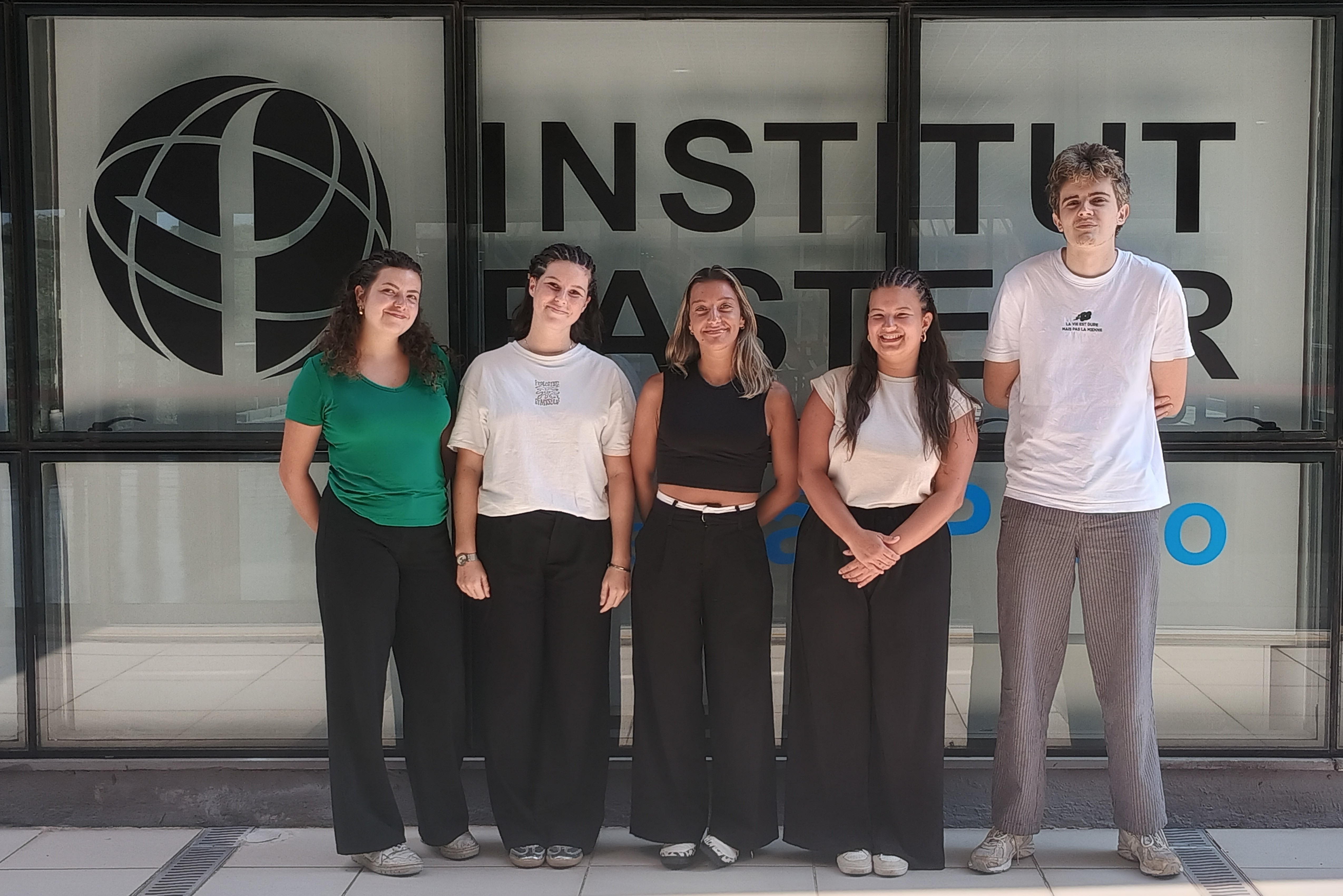
Students and early-career researchers highlight scientific excellence, a collaborative environment, and Brazil’s relevance for global health research.
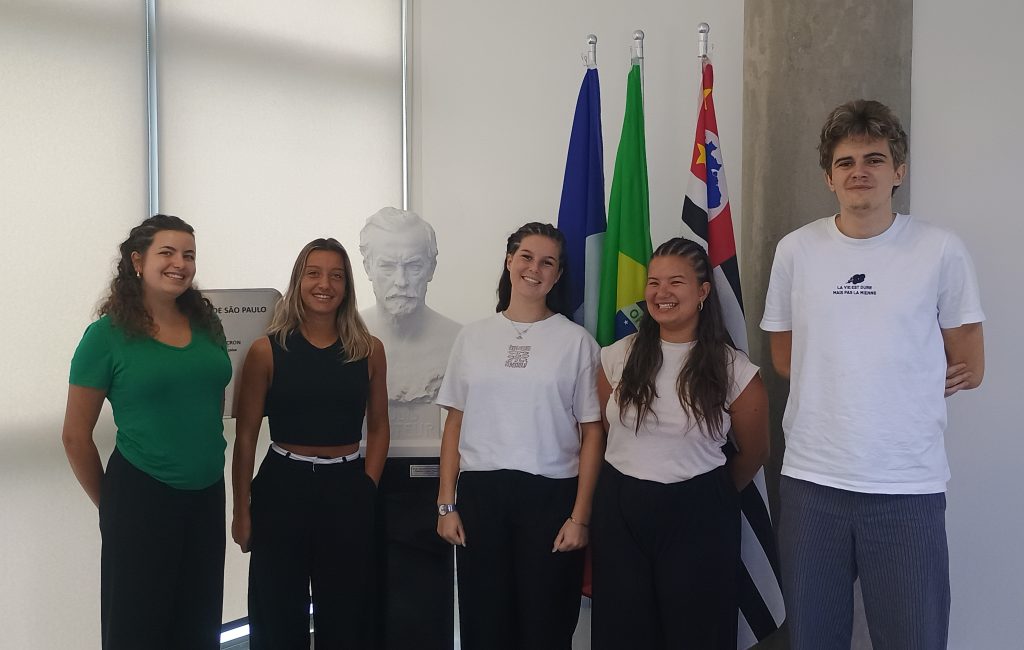
The Institut Pasteur de São Paulo (IPSP) has been attracting international researchers interested in developing studies in infectious diseases within a dynamic and highly collaborative scientific environment. A group of French students, from different institutions, chose the institute to carry out internships and research projects, reinforcing IPSP’s role as a space for training and international scientific cooperation.
Among the factors motivating their move to Brazil are the institute’s reputation in biomedical research, the opportunity for international experience, and the interest in studying infectious diseases in a context marked by high biodiversity and epidemiological complexity. In some cases, contact with the institute occurred spontaneously, through the reading of scientific articles and individual interest in specific research lines. In others, their arrival resulted from structured academic initiatives, involving coordination between students, professors, and international relations offices at their home institutions.
“Brazil is one of the countries with the greatest biodiversity in the world, which makes it an ideal environment to study infectious diseases in complex ecosystems,” says researcher Maximilien Malivoir, from Université de La Réunion, who came to IPSP after becoming interested in research on viruses in Neotropical bats. At the institute, he works with influenza viruses, focusing on the construction and analysis of complete genomic databases used to study the evolution and circulation of these viruses through phylogenetic analyses.
Also in the field of influenza viruses, student Léa Bernard, from IUT de La Rochelle, is developing an epidemiological surveillance project aimed at monitoring the circulation of Influenza A and B viruses in different neighborhoods of the city of São Paulo and surrounding regions. “My work is precisely linked to this surveillance, tracking virus circulation and helping to identify patterns and potential outbreaks,” she explains.
Another line of research involves investigating viruses with zoonotic potential in urban rats. “Identifying viruses in animals that live close to humans is essential to improve the early detection of health threats,” says Emy Bernussou, who works on the analysis of rat samples, focusing on identifying viruses with zoonotic potential and building risk maps.
Juliette Dumartin, from IUT de La Rochelle, is conducting studies on the parasite Trypanosoma vivax, aiming to understand how it can reach the nervous system. Using organoid models—structures similar to the brain—her research investigates the interaction between the parasite and neural tissues, as well as its possible ability to cross biological barriers. “By studying how this parasite interacts with these models, we can advance our understanding of its mechanisms of action,” she explains.
At the intersection of virology and neuroscience, Camille Gratreaud, also from IUT de La Rochelle, investigates the effects of Influenza A and Zika viruses on human neurons. Her work uses cells derived from patients with congenital Zika syndrome to understand the mechanisms involved in the neurological damage caused by these infections. “By investigating how these viruses affect neurons derived from patients with congenital Zika syndrome, we aim to better understand the mechanisms involved in neurological damage and contribute to future prevention strategies,” she states.
The scientific environment at IPSP is highlighted by researchers as one of its main strengths. The interaction between teams from different fields, along with the frequency of seminars and scientific discussions, creates a continuous space for learning and exchange. The proximity between students and more experienced researchers is also emphasized as a factor that fosters training and project development.
“The constant interaction between different teams and the accessibility of researchers create a very stimulating environment for learning,” says Camille Gratreaud.
In addition to scientific advances, the researchers highlight the impact of the international experience on their academic and personal development. Their time in Brazil is described as enriching, both through exposure to a new culture and through immersion in a diverse and welcoming research environment.