
Less evident forms of neuroinfection may cause long-lasting cognitive damage and require strategies that go beyond eliminating the infectious agent.
How can pathogens with low presence in the brain cause persistent changes in neuronal functioning? Recent studies indicate that these microorganisms may directly interfere with communication between neurons and affect brain activity even without evident inflammatory signs — a finding that broadens the understanding of diseases affecting the nervous system. At the same time, artificial intelligence-based tools are beginning to open pathways for therapeutic approaches that go beyond fighting the infectious agent, focusing instead on reversing functional alterations observed in experimental models.
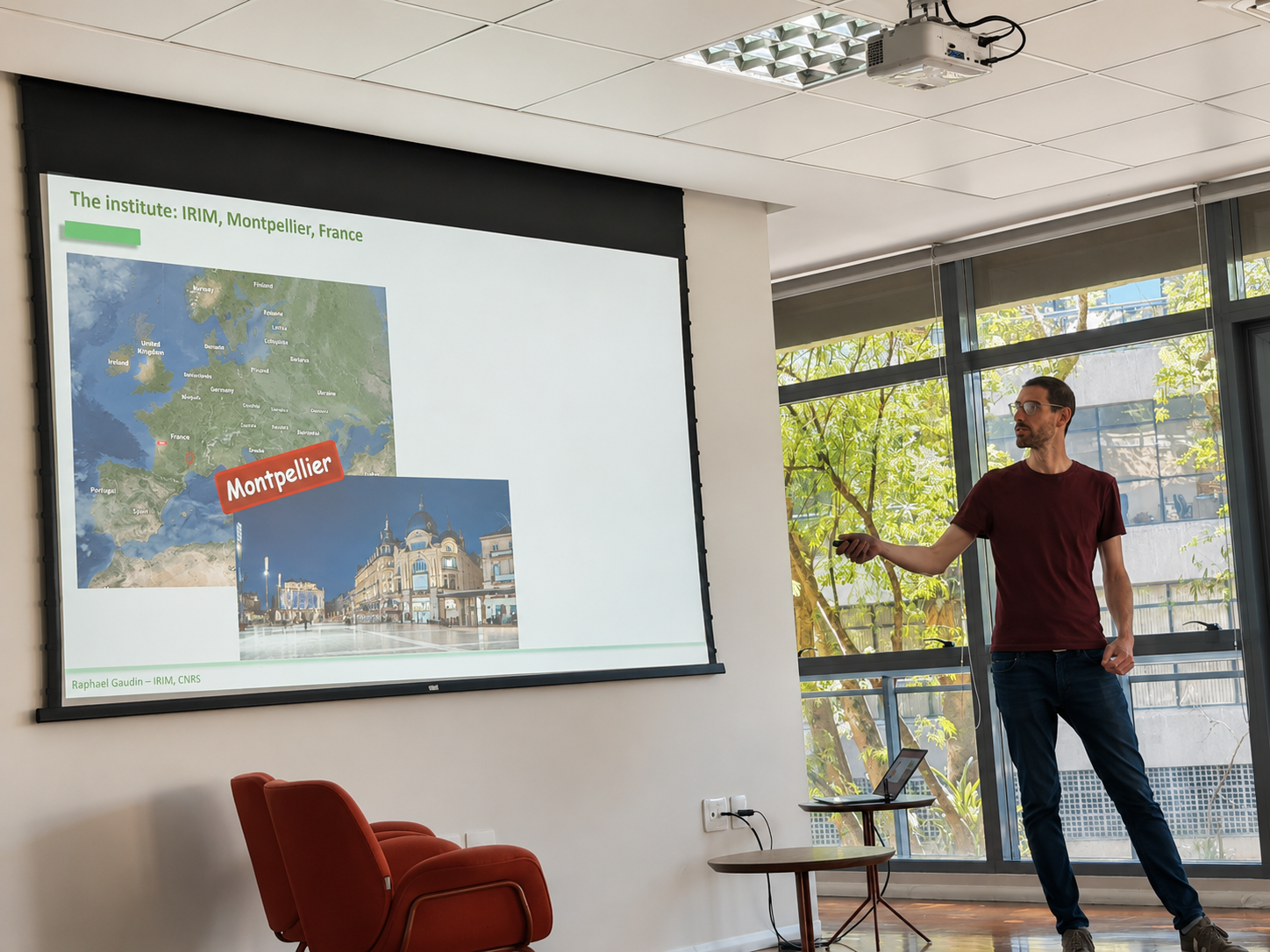
These advances were presented during a seminar held at the Institut Pasteur de São Paulo last Tuesday (May 26) by researcher Raphael Gaudin, from the Institut de Recherche en Infectiologie de Montpellier (IRIM) part of the CNRS and University of Montpellier. As head of the Membrane Dynamics of Viruses (MDV) team, Gaudin investigates interactions between viral agents and the central nervous system, as well as their functional effects, in collaboration with the IPSP’s Nervous System Disease Modeling group, led by professor Patricia Beltrão-Braga.
Clinical forms — Neuroinfections may range from acute conditions, characterized by intense replication and inflammatory response, to more subtle manifestations with low viral load and limited immune reaction. According to Gaudin, it is precisely these subtler presentations that pose a greater challenge: “these neurocognitive disorders are harder to detect, but may have significant long-term impact.”
This pattern became more evident during the COVID-19 pandemic, but it is not exclusive to SARS-CoV-2. According to Gaudin, persistent neurocognitive alterations have also been observed in infections caused by viruses such as HIV/AIDS, Zika, and West Nile fever, indicating that this type of impact may be broader than previously thought.
“We observed that the infectious agent may localize itself in a highly restricted manner within brain tissue,” the researcher stated. This localized distribution, often without associated inflammation, helps explain the persistence of cognitive symptoms even after the acute phase of infection.
Dysfunction and therapies — At the cellular level, one of the main effects of these infections is the alteration of synaptic dynamics. In brain organoid models, the team identified changes both in the organization and performance of neuronal connections. “We observed that the pathogen may become trapped within synapses, directly interfering with this activity,” explained Gaudin.
These alterations are reflected in the brain’s electrical patterns, which are used as indicators of neuronal communication. To analyze these signals, researchers employ artificial intelligence systems capable of comparing healthy and infected tissues, as well as testing possible interventions. “The idea is to predict whether a therapeutic approach can restore functioning to a pattern closer to normal,” he said. The use of experimental models that more accurately represent human physiology, such as brain tissue cultures, has enabled researchers to observe these effects in more complex contexts.
In addition to widely studied agents, Gaudin highlighted the potential role of still poorly investigated microorganisms. “The hypothesis is that clinically neglected pathogens, such as orthobunyaviruses, may subtly affect cognition without being detected by traditional clinical surveillance,” he said. Transmitted by mosquitoes, these viruses belongs to a group of neurotropic arboviruses that circulate widely all over the world, despite still being poorly studied.
This scenario reinforces an important shift in the field: the development of therapies that not only eliminate the infectious agent, but also reverse its effects on the brain. “We are moving toward an approach that considers not only the presence of the pathogen, but also its functional consequences on the nervous system,” he concluded.