
Research indicates that isolated information and generic campaigns fail to change behavior, while active listening, motivational conversations, and co-created school initiatives are more effective in reducing vaccine hesitancy.
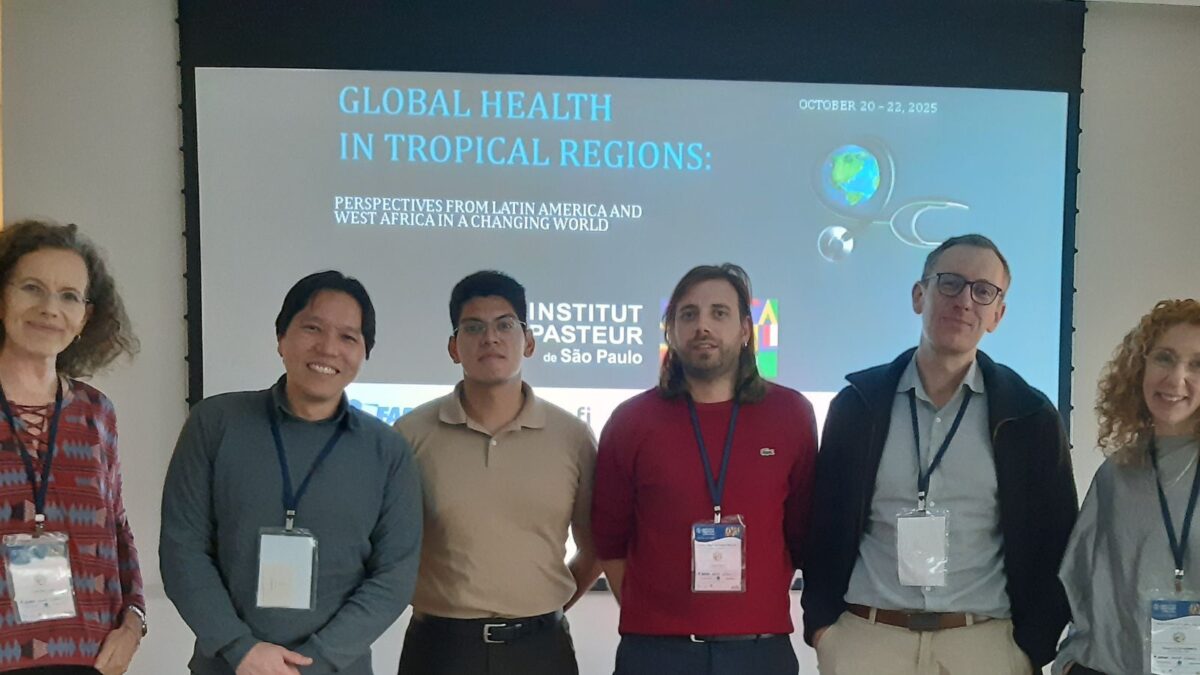
Campaigns based solely on information do not change behavior. What truly works is dialogue. That is one of the main conclusions of a French study presented by epidemiologist Judith Müller, from the Institut Pasteur de Paris, during the panel Epidemiology and Public Health in Tropical Ecosystems, held on October 21 at the event “Global Health in Tropical Regions – Perspectives from Latin America and West Africa in a Changing World”, organized by the Institut Pasteur de São Paulo (IPSP) at the Universidade de São Paulo (USP). The panel also featured experts Juan Carlos Ocampo and Léonard Heijerdahl, who discussed preventive behavior toward mosquito-borne diseases and vaccine hesitancy among healthcare professionals.
The study led by Müller revealed that vaccination coverage against human papillomavirus (HPV) in the French Republic remains well below expectations. Only 21% among 15-year-old girls, compared to rates above 80% in the United Kingdom and the Portuguese Republic (2017 data). According to the researcher, the causes of this low uptake go beyond access to healthcare services and are closely tied to communication failures and social inequalities.
Slogans do not persuade – Müller’s team, part of the Pref HPV consortium, combined two methodologies: discrete choice experiments (DCEs), which simulate real-life decision-making scenarios to identify what most influences the choice to vaccinate, and 7C-KAP questionnaires, which assess psychological and social factors such as trust, risk perception, and attitudes toward vaccination. The results showed that generic campaigns built around slogans, statistics, or fear-based messages tend to reinforce resistance and mistrust. Clinical approaches alone also proved ineffective, as they place the burden of persuasion on physicians without providing them with appropriate communication tools.
Transformative communication — On the other hand, what works, the study found, are strategies that bring science closer to communities and turn information into dialogue. School-based campaigns co-created with teachers, parents, and healthcare professionals increased vaccination intentions, particularly in socially vulnerable areas. These initiatives provide safe spaces where adolescents and families can discuss the subject openly, helping to reduce stigma around HPV and increase awareness of real risks.
Müller also emphasized that motivational conversations led by trained professionals have a more lasting effect than mass campaigns. “Information alone does not change behavior. What transforms is dialogue — listening to doubts, understanding resistance, and adapting communication to local realities,” she said.
Experience-shaped behavior – Psychologist Juan Carlos Ocampo, from the Institut Pasteur de Paris, reinforced the importance of understanding human behavior to strengthen prevention policies. He presented results from the ELIM-IP (2023–2024) and MOUSTIKAP-P (2025–2027) projects, which explore how the French population responds to the risk of mosquito-borne diseases such as dengue and chikungunya. His findings show that people tend to adopt preventive measures after experiencing risk directly rather than before. The study found that mosquito bites are the primary trigger for preventive action, while fear or prior knowledge of the disease plays a minor role.
Among the most widely accepted measures are window screens, eliminating standing water, and vaccines with few side effects. In contrast, larvicides and fumigation — often associated with environmental impacts — are firmly rejected. Ocampo noted that the public tends to place responsibility for prevention on the government rather than on themselves, underscoring the need for participatory public policies and ongoing communication. His new project, MOUSTIKAP-P, expands this approach through qualitative interviews and co-creation workshops to develop preventive messaging involving residents of affected regions. “Individual protection can create a false sense of security. We need to put people at the center of prevention and build trust through listening and transparency,” he said.
Hesitation in hospital settings – Social scientist Léonard Heijerdahl, also from the Institut Pasteur de Paris, presented an unexpected finding: vaccine hesitancy is also present among healthcare professionals. He explained that doctors, nurses, and other health workers, though among the most trusted intermediaries for the public, are increasingly expressing doubt and mistrust, a trend worsened by the lack of safe spaces to discuss the issue. This finding led to the creation of DevShape, a 2024 project that applies digital ethno-epidemiology and generative artificial intelligence to study vaccine sentiment among healthcare professionals in the French Republic.
The research applies digital social listening to posts on Twitter/X, further combining this with ethnographic interviews and a national survey, mapping what professionals say and what they choose not to say about vaccines. Early results indicate that many avoid expressing negative opinions out of fear of judgment or professional repercussions, leading to what Heijerdahl calls “hidden vaccine hesitancy.” The absence of open dialogue among colleagues creates silent environments where doubts are internalized and later resurface in online communities, where skepticism tends to deepen.
Using locally trained, ethically designed AI models, the team analyzed thousands of posts and identified polarization patterns similar to those seen in the general public. In 2023, following changes to the X platform (formerly Twitter), there was a sharp decline in pro-vaccine posts and a temporary rise in anti-vaccine narratives. Heijerdahl argued that restoring trust depends on rebuilding open, empathetic spaces for dialogue within healthcare institutions, where questions can be discussed without fear of reprisal.
“Hesitancy is not a lack of information; it is a lack of trust,” he said. Based on this understanding, the project seeks to develop vaccine dialogue interventions that strengthen communication between healthcare professionals and the public.
In addition to Müller, Ocampo, and Heijerdahl, the panel also featured presentations by the Institut Pasteur de São Paulo. The first, Helder Nakaya, who discussed the use of artificial intelligence in precision health and disease monitoring; Paolo Bosetti, who addressed mathematical models applied to infectious disease dynamics; and Tamara Giles Vernick, who analyzed human, animal, and viral interactions in tropical ecosystems based on research conducted in the Democratic Republic of Congo.