Studies presented by researchers from the Institut Pasteur de São Paulo at an international scientific meeting investigate both the long-term effects of the Zika virus on brain tissue and innovative tools for monitoring infection in real time.
Research conducted at the Institut Pasteur de São Paulo (IPSP) is expanding scientific knowledge of the Zika virus, both by improving understanding of the neurological damage the infection may cause and by developing tools that enable researchers to monitor viral behavior in real time.
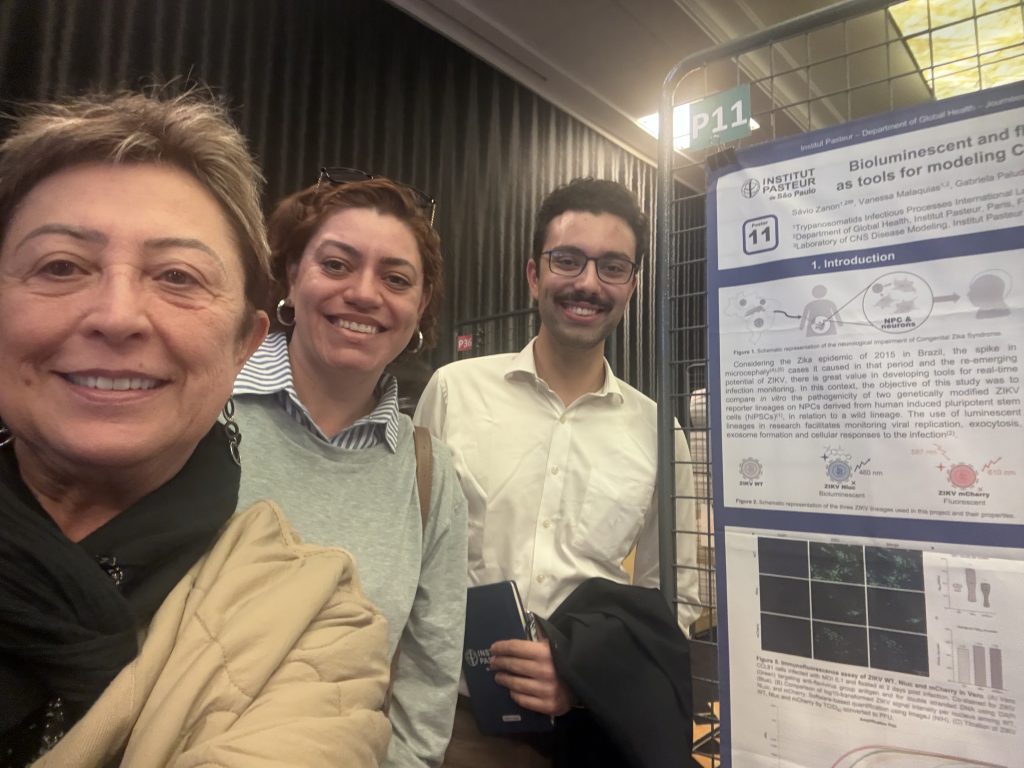
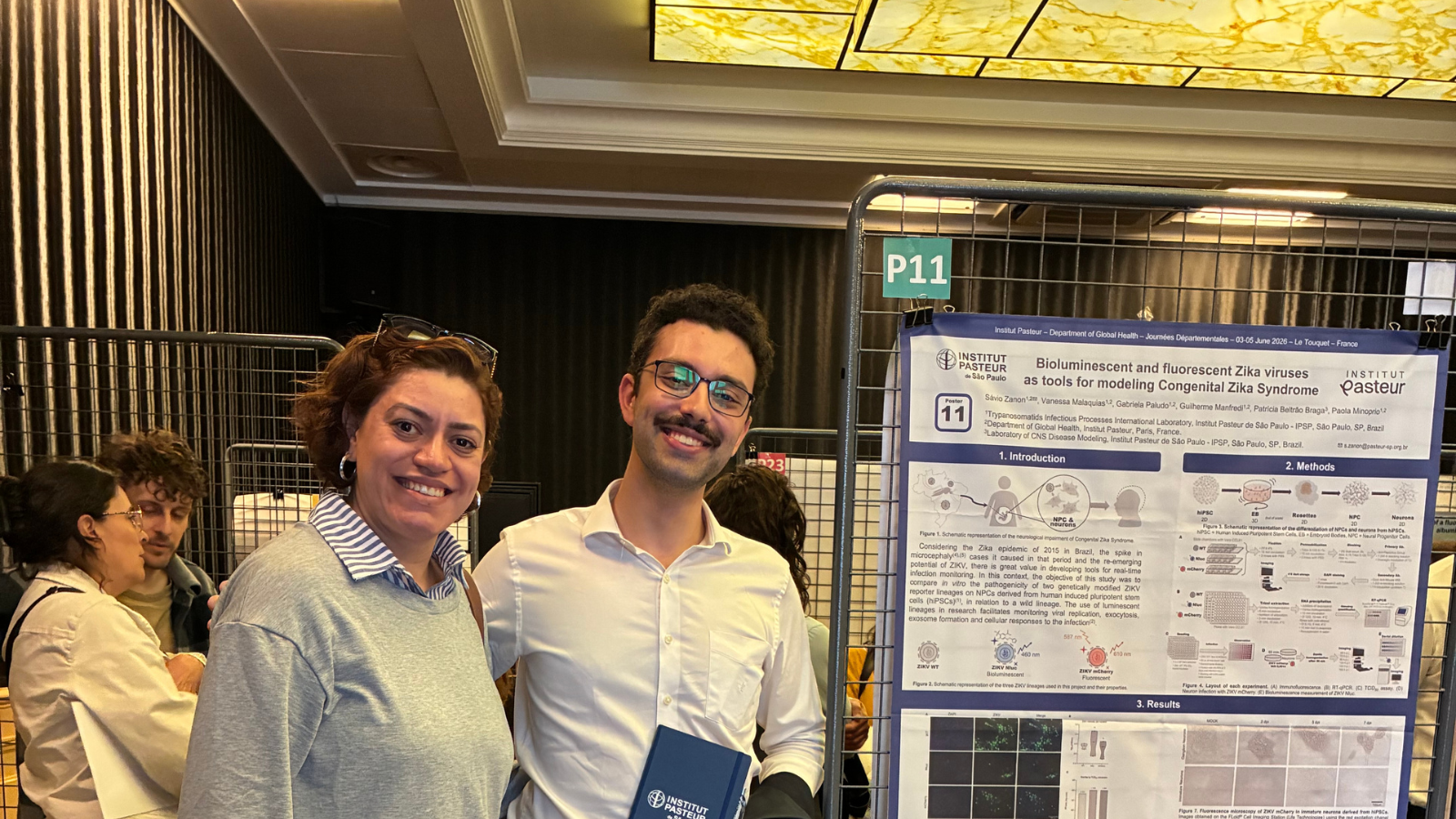
The findings were presented by researchers from the Trypanosomatid Infectious Processes group, led by Paola Minoprio, during Departmental Days 2026, the scientific meeting of the Department of Global Health at the Institut Pasteur in Paris, France, held from June 3 to 5. Researcher Vanessa Barbosa Malaquias delivered an oral presentation, while Sávio Zanon presented a scientific poster.
Malaquias’ study investigates a topic that has attracted increasing attention from the scientific community: the potential long-term effects of Zika virus infection on mature neural tissues. Although the virus became widely known during the 2015 epidemic because of its association with cases of microcephaly, growing evidence suggests that it may also induce persistent alterations in adult brain tissue.
To investigate this phenomenon, the researcher used human brain organoids—three-dimensional structures generated in the laboratory from stem cells that reproduce key characteristics of the human brain. The experiments showed that, following an initial phase of intense viral replication, the organoids continued to undergo structural deterioration even after detectable viral levels had declined substantially.
According to the findings, infected organoids lost nearly half of their original area over the course of the experimental follow-up. These observations suggest that a transient infection may trigger persistent damage in nervous tissue, providing a relevant model for investigating mechanisms associated with virus-induced neurodegeneration.
Zanon’s study focused on validating genetically modified versions of the Zika virus capable of emitting light signals. One viral strain produces bioluminescence, while another produces fluorescence, allowing researchers to monitor infection in human cells in real time.
The main challenge was to demonstrate that these modified viruses retained biological behavior comparable to that of the original virus. The experiments showed that both engineered viruses remained capable of infecting and replicating in human neural cells while generating light signals consistent with the dynamics of infection. These tools pave the way for faster studies of disease mechanisms and for evaluating potential antiviral strategies.
In addition to the scientific presentations, IPSP Executive Director Paola Minoprio participated in the panel discussion “Reflecting on the Future of One Health,” which explored international, interdisciplinary, and intergenerational perspectives on addressing global health challenges.
The participation of IPSP researchers in the meeting reinforces the Institute’s integration within the international Institut Pasteur network and helps increase the visibility of research conducted in Brazil in strategic areas of global health, particularly in addressing emerging and re-emerging infectious diseases.