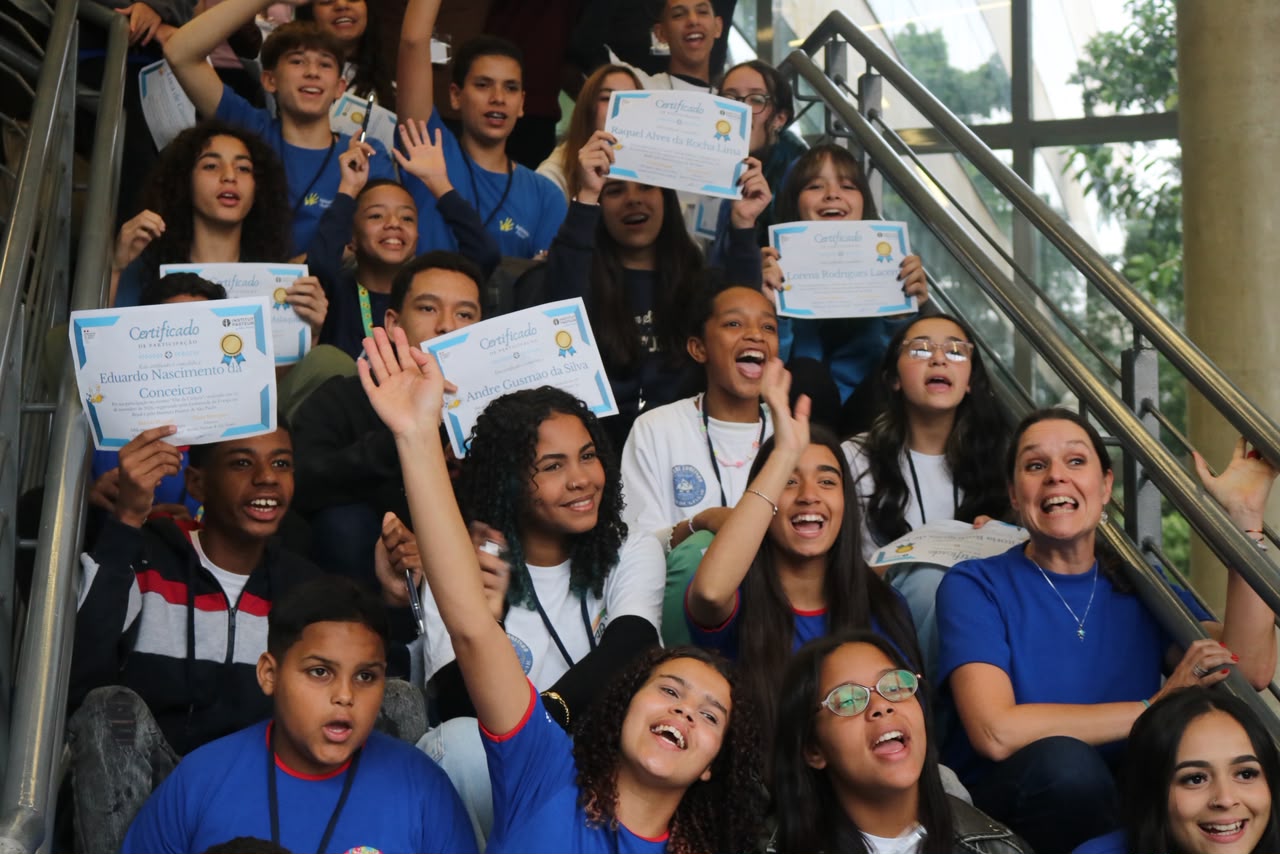
On World Science Day for Peace and Development, the institute welcomed 36 teenagers from USP’s Escola de Aplicação and the NGO ARCA for laboratory activities, games, and conversations with researchers
How does a research center work? What do scientists study, and how do they work? For 36 teenagers from USP’s Escola de Aplicação da Faculdade de Educação and the NGO ARCA, these questions were explored inside the Institut Pasteur de São Paulo (IPSP) during an afternoon of tours, laboratory activities, and games. Held on November 10, the event marked World Science Day for Peace and Development, aiming to spark an interest in research and bring young people closer to science.
The initiative was organized by IPSP and the French Embassy in Brazil, with support from the French Consulate in São Paulo. The aim was to give teenagers from socially vulnerable communities access to spaces where knowledge is created.
The program began with an introduction to the institute and some of its research areas. Speakers included IPSP Executive Director Paola Minoprio and researchers Angélica Cristine de Almeida Campos, head of SIMBA – the Viral Spillover & One Health Laboratory, and Caio Haddad Franco, head of the Therapeutics for Combating Multidrug-Resistant Pathogens research group.
The teenagers were then divided into two groups, which took turns touring the facilities and participating in hands-on laboratory activities, such as extracting DNA from strawberries. During the tour, they learned how the laboratories operate and about the precautions required when working in biosafety level 3 (BSL-3) facilities.
The program also featured quizzes about research in the French language and women scientists, led by Sarah Madjour, Science and Technology Advisor at the Consulate of France in São Paulo. The activities combined questions and games to encourage the teenagers’ participation. The afternoon ended with refreshments and an opportunity to socialize.
Science and opportunities
ARCA’s participation connected the institute with an organization that provides education, social assistance, and vocational training in São Paulo’s Vila Prudente community. Its work supports children, teenagers, and adults, seeking to expand opportunities and strengthen residents’ autonomy.
Gérard Chuzel, who is responsible for Financial and Project Administration at IPSP and volunteers with ARCA, explained that the event aimed to introduce young people to research and reach teenagers from socially disadvantaged areas. The visit gave participants an opportunity to meet researchers, try scientific activities, and experience a research environment firsthand.