
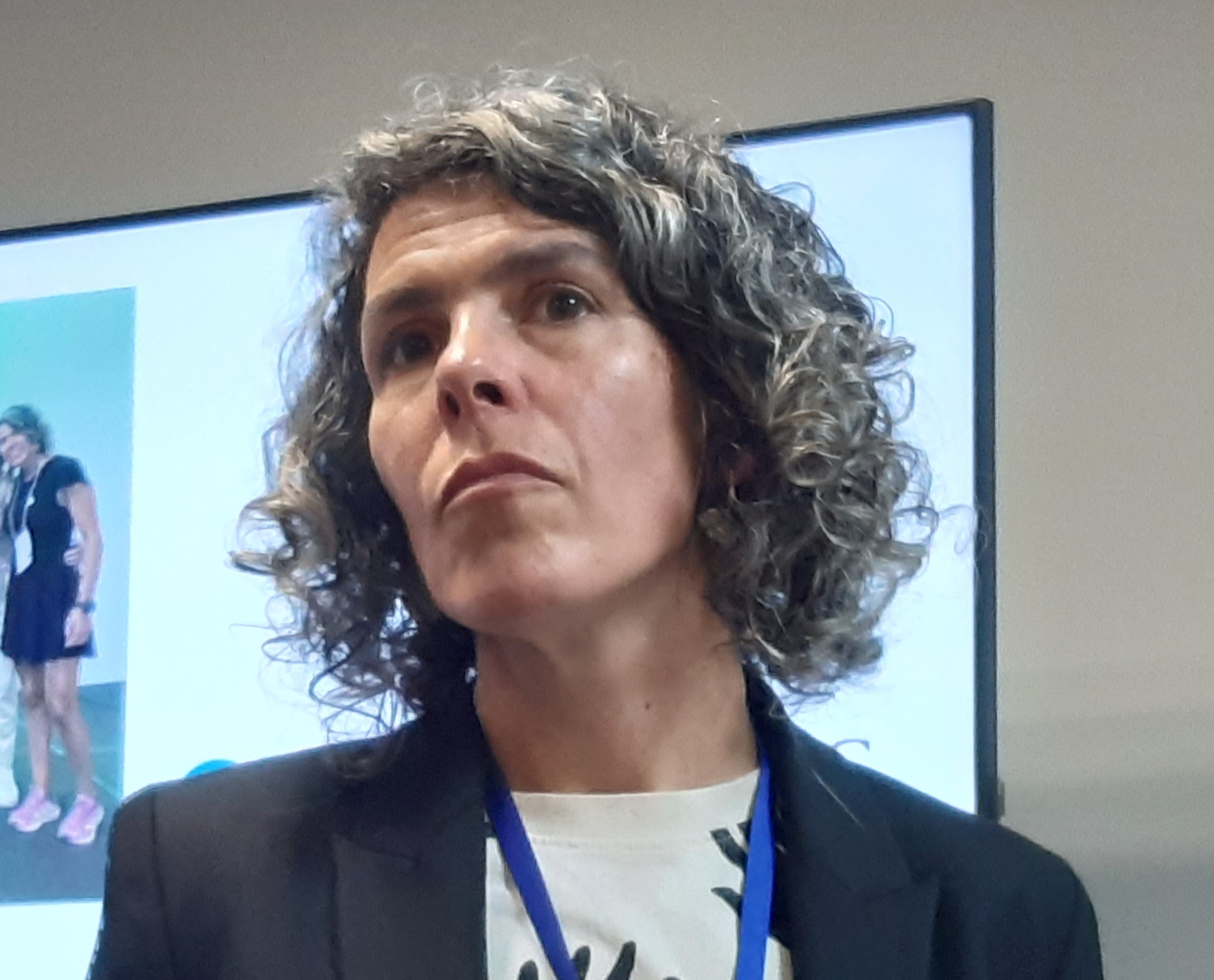
Researchers presented applications of artificial intelligence, bioinformatics, genomics, and spatial transcriptomics to investigate infectious diseases, predict health risks, and understand how immune responses are organized within tissues.
The use of artificial intelligence to predict clinical outcomes, the application of machine-learning techniques to uncover gene functions, the integration of climate data into health surveillance, and the spatial mapping of tissue immunity were among the topics discussed on Wednesday afternoon (September 16), during the first day of the “Institut Pasteur de São Paulo & Institut Pasteur de Montevideo: A Pasteurean Scientific Meeting,” held at the University of São Paulo (USP) from September 16 to 18.
The program brought together researchers from the Institut Pasteur de Montevideo (IPMon) and the Institut Pasteur de São Paulo (IPSP) to present different applications of computational tools and data-science approaches in biology, health, and infectious diseases. The presentations showed how integrating large biological, climatic, and epidemiological datasets is expanding the ability to understand complex processes and develop new research and surveillance strategies.
Opening the scientific session, Nadia Riera, from the Institut Pasteur de Montevideo, presented research on the development of the gut microbiome in very-low-birth-weight preterm infants and its impact on their health.
Riera showed how microbiome analyses combined with computational tools can identify patterns associated with the risk of infectious and inflammatory complications. The studies highlighted the importance of colonization by microorganisms such as Klebsiella pneumoniae and Escherichia coli, as well as the effects of antibiotic use and breast milk feeding on microbial composition.
One of the highlights of the presentation was the development of a computational index capable of representing the degree of ecological maturation of the gut microbiome. According to Riera, the tool may eventually contribute to the early identification of newborns at greater risk of clinical complications, supporting medical decision-making and the personalization of care strategies.
Next, Flavio Pazos, also from IPMon, discussed the use of machine-learning methods to address one of the major challenges in modern biology: identifying the functions of genes that have not yet been characterized.
Pazos noted that the rapid growth of genomic databases contrasts with the relatively small number of genes whose functions have been experimentally validated. To help bridge this gap, his group integrates different layers of biological information, including transcriptomics, genomic organization, and molecular interaction data.
Among the examples presented were studies involving organisms such as Caenorhabditis elegans and Trypanosoma brucei, in which computational models identified candidate genes involved in metabolic processes, functions associated with cellular cilia, and mechanisms of cell division. According to Pazos, the approach transforms large volumes of biological data into hypotheses that can subsequently be tested in the laboratory.
The third presentation was given by IPMon researcher Luisa Berna, who discussed different applications of bioinformatics and genomics in infectious disease research. After presenting studies involving microbial genomics, antimicrobial resistance, and environmental metagenomics, Berna focused on research involving the parasites Toxoplasma gondii and Neospora caninum.
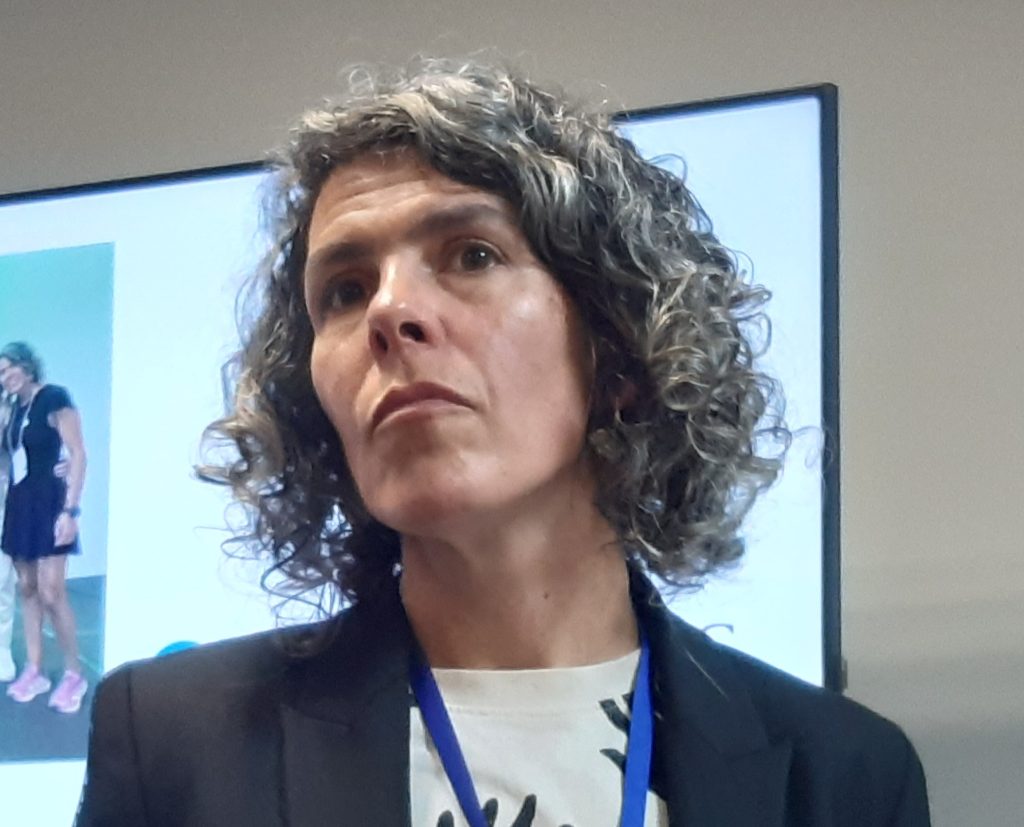
Luisa Berna (IPMon)
Using long-read sequencing technologies and advanced genomic analysis tools, her team revisited genome assemblies previously considered reference genomes and identified important structural differences between the two species. The studies also revealed high genetic diversity among South American Toxoplasma gondii lineages, highlighting complex patterns of recombination and ancestry.
In the final part of her presentation, Berna described a strategy based on genetic barcoding that makes it possible to track individual parasite populations during infection. The methodology is being used to investigate how these organisms cross biological barriers and colonize different tissues.
Macarena Sarroca, from IPMon, focused her presentation on the effects of heat waves and cold spells on the health of the Uruguayan population. She presented results from an analysis combining decades of meteorological records with mortality data from several cities across the country. The studies identified significant increases in the risk of death during extreme temperature events, particularly among vulnerable individuals and people with chronic diseases.
In addition to demonstrating the health impacts of these climate events, Sarroca discussed initiatives aimed at establishing a climate and health observatory and developing systems capable of turning weather forecasts into tools to support public health planning.
Mauro Morais, from the Institut Pasteur de São Paulo, addressed the use of climate data to support health surveillance and prevention within a One Health approach.
Morais presented studies focused primarily on yellow fever, a disease whose transmission depends on complex interactions among viruses, vectors, non-human primates, and environmental conditions. The analyses showed how temperature influences the viral development cycle in mosquitoes and can affect patterns of disease spread.
Among the findings discussed by Morais was evidence that the recent increase in temperatures may favor viral circulation at higher altitudes, in areas historically less conducive to transmission. The group is also developing machine-learning models that combine climatic and environmental variables to estimate the risk of disease occurrence.
According to Morais, integrating this information can complement traditional epidemiological surveillance systems and contribute to the development of early-warning mechanisms.
Closing the afternoon program, Adriana Simizo, from Helder Nakaya’s group at the Institut Pasteur de São Paulo, presented applications of spatial transcriptomics to investigate the organization of immune responses in different biological contexts.
Simizo explained how the technology combines gene-expression data with cellular location, making it possible to identify specialized niches and patterns of interaction among cells within tissues.
Examples included analyses of viral infections in the brain and studies of tertiary lymphoid structures in tumors. Using spatial autocorrelation algorithms commonly employed in epidemiology to identify areas with higher or lower concentrations of cases, the group adapted these tools for tissue analysis, enabling the identification of highly specialized regions of cellular organization and the reconstruction of communication networks among different cell populations.
The approaches presented offer new possibilities for understanding how immune responses are spatially organized in different contexts, ranging from viral infections to cancer. Simizo also mentioned the application of spatial transcriptomics to leishmaniasis, for which the group had recently sequenced its first datasets.