
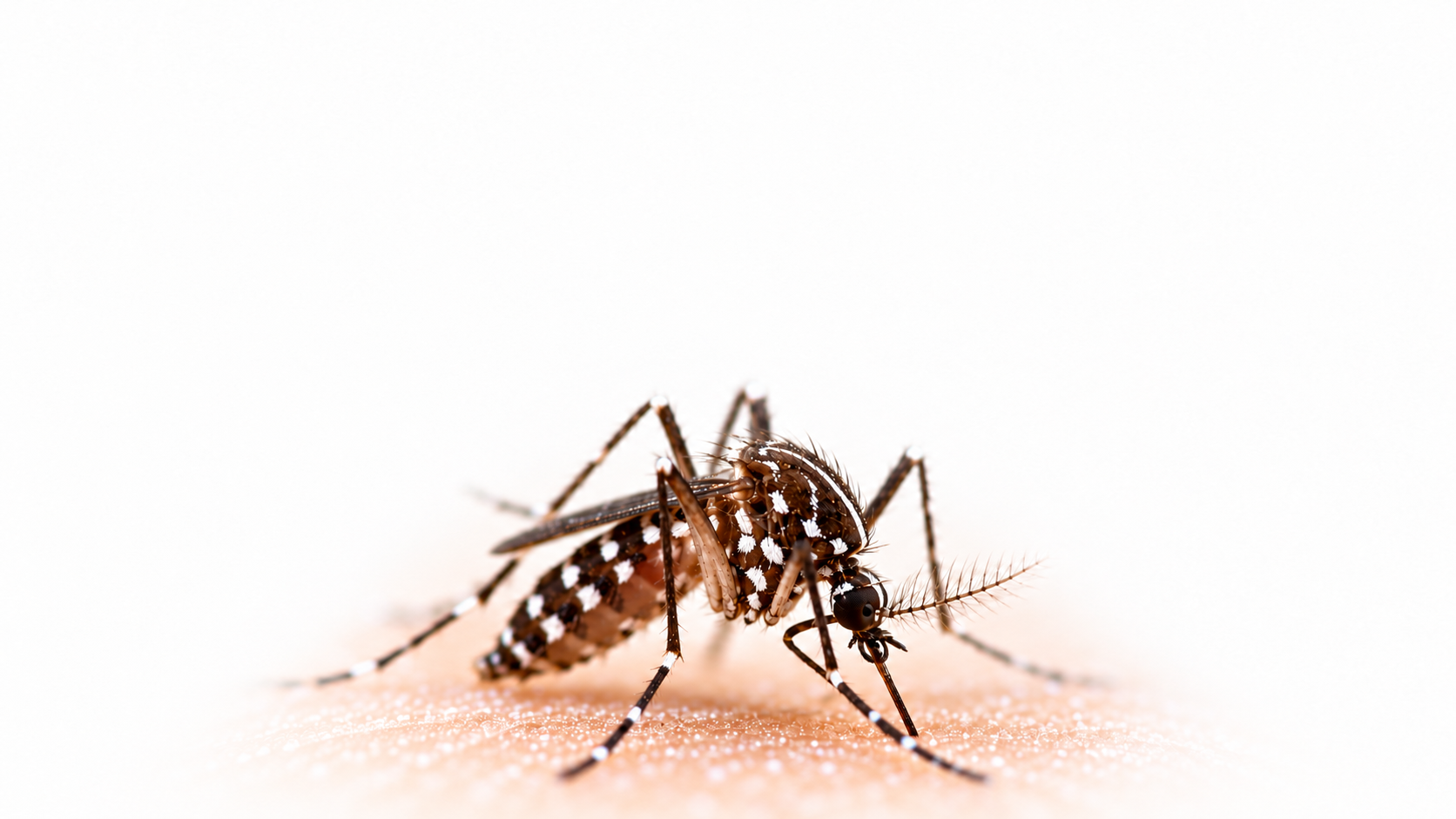
Analysis of data from 2015 to 2025 combined computational tools, statistical modeling and epidemiological information to investigate dengue’s spread across the country.
A study conducted at the Institut Pasteur de São Paulo (IPSP) estimated that the distribution of locally acquired dengue cases shifted toward more southerly latitudes in Brazil at a rate of 56.6 kilometers per year between 2015 and 2025. The methodology used in the study could, in the future, support research into other diseases transmitted by the Aedes aegypti mosquito, such as Zika and chikungunya.
The findings are preliminary and have not yet been published in a scientific journal. Although the analysis was limited to Brazil, the observed trend highlights the importance of also monitoring dengue distribution in neighboring countries, such as Argentina and Uruguay.
Led by Mauro César Cafundó de Morais, head of the Climate and Health Laboratory at IPSP, the research also involves Richard Paul, from the Institut Pasteur in France, and Alexandre Sarmento Queiroga, from the Aggeu Magalhães Institute/Fiocruz Pernambuco and the Paraíba School of Public Health.
The study used data on confirmed dengue cases recorded in Brazil’s Notifiable Diseases Information System (Sinan) between 2015 and 2025, alongside population and geographic information for Brazilian municipalities. The analysis considered only locally acquired cases—those in which infection occurred in the location under investigation—and included municipalities with no confirmed cases in certain years. In total, more than 61,000 observations were analyzed, each representing one Brazilian municipality in one year of the study period.
The researchers used regression models, generalized additive models and statistical resampling procedures (bootstrap) to analyze dengue incidence at different latitudes in Brazil and estimate how quickly its distribution changed over time.
“We divided the country into latitude bands and calculated dengue incidence in each one. By considering the number of cases per 100,000 inhabitants, we can compare regions with different population sizes,” Morais explains.
Shifting distribution — One analysis showed that, in 2025, the southernmost latitude band with an incidence of at least 100 locally acquired cases per 100,000 inhabitants was approximately 550 kilometers farther south than in 2015. This band includes municipalities in the state of Rio Grande do Sul.
In another stage of the study, the researchers analyzed case distribution over the entire period and estimated the average rate of change. “What advanced computational tools enabled us to do was precisely to estimate this annual rate of change,” Morais explains.
According to the study, the shift did not occur in a single jump: the year-by-year analysis of latitude bands showed a progression throughout the period.
The researchers also investigated whether the trend could be related to imported cases, variations in the number of diagnostic tests or the inclusion of mild cases. In a separate analysis of cases requiring hospitalization, the distribution also shifted southward, at an estimated rate of 40 kilometers per year.
Other diseases and next steps — The methodology’s applicability to other diseases transmitted by Aedes mosquitoes still needs to be assessed. According to Morais, each virus has distinct characteristics and transmission conditions that must be considered before the approach is used in other investigations.
To advance the dengue research, the next steps include investigating factors associated with the observed trend, including the influence of climate and the role of the introduction of different viral serotypes.
Morais also intends to expand collaboration with institutions in other countries in the Americas to determine whether similar changes in disease distribution can be identified beyond Brazil.
He believes that analyzing dengue distribution could support surveillance efforts. “The main idea is to try to create an early warning system that provides advance guidance on what to do and how to do it,” he says.