
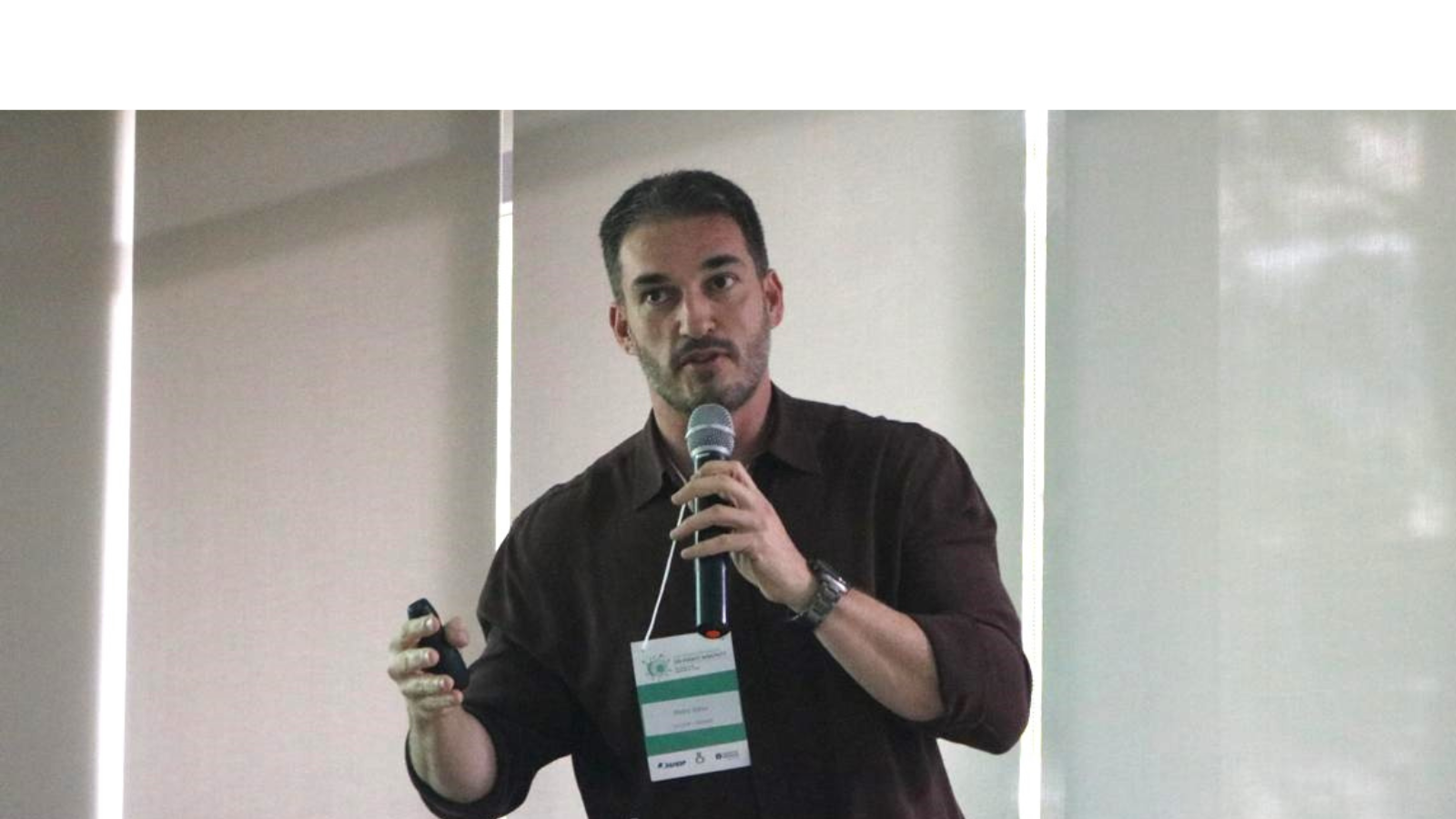
Researchers from USP, Unicamp, and The Ohio State University presented findings on inflammasomes, immunometabolism, and immune signaling associated with inflammation, infections, and cancer during the second day of the symposium held at USP.
The afternoon program on the second and final day of the International Symposium on Innate Immunity, held on September 5 at the University of São Paulo (USP), brought together researchers who presented advances in understanding the molecular mechanisms that regulate innate immunity, inflammatory responses, and the fight against infections and tumors. The talks ranged from the identification of new inflammasome regulators to the role of cellular metabolism in macrophage activity and the therapeutic possibilities associated with the STING signaling pathway.
The event took place on September 4 and 5 and was organized by the University of São Paulo’s Institute of Biomedical Sciences (ICB-USP) and the Institut Pasteur de São Paulo (IPSP), with support from the São Paulo Research Foundation (FAPESP).
The session opened with Dario Zamboni, from the University of São Paulo’s Ribeirão Preto Medical School (FMRP-USP), who presented research findings aimed at understanding inflammasomes, protein complexes responsible for detecting intracellular infections and triggering inflammatory responses.
Using a proximity-based proteomics strategy, the researcher and his team identified proteins associated with the NLRC4 inflammasome during infection with Legionella pneumophila. Among the targets identified, the kinase PAK2 stood out: its absence impaired the activation of different inflammasomes, reduced IL-1β production, and hindered the cells’ ability to control bacterial proliferation.
According to Zamboni, the results indicate that the protein plays a broader role than previously thought. “PAK2 appears to act as a common regulator of different inflammasomes, suggesting the existence of shared mechanisms that control the activation of these structures,” he noted during the presentation.
The researcher also discussed evidence that previous exposure to Legionella can induce long-lasting immune responses consistent with mechanisms of trained immunity. The experiments showed that animals previously exposed to the bacterium developed greater resistance to subsequent infections, including those caused by other microorganisms.
Glen Barber, from The Ohio State University, then presented a talk on the cGAS-STING signaling pathway, one of the main cellular systems responsible for detecting abnormal DNA in the cytoplasm.
Barber reviewed discoveries that helped establish the importance of STING in innate immunity and discussed how this pathway connects DNA damage, infections, and antitumor surveillance. According to the researcher, STING activation triggers the production of interferons and other inflammatory molecules capable of mobilizing immune responses against infected or genetically altered cells.
The presentation also highlighted that many tumors reduce or lose cGAS-STING pathway activity as a strategy to evade immune surveillance. Based on this knowledge, different groups have been developing therapeutic approaches aimed at reactivating this signaling pathway.
The strategies discussed included synthetic STING agonists, nanoparticles capable of inducing antitumor inflammatory responses, and vaccine platforms designed to control viral infections. The results presented point to the pathway’s potential as a target for new therapies in oncology and immunology.
Concluding the scientific program, Pedro Moraes-Vieira, from the University of Campinas (Unicamp), addressed the relationship between cellular metabolism and inflammation. His talk presented a model describing how the transcription factor HIF-1α temporally controls the pro-inflammatory response of macrophages through a biphasic regulatory program.
The results showed that HIF-1α acts during the early stages of inflammatory activation, promoting metabolic changes that favor the production of reactive oxygen species and enhance the cells’ antimicrobial capacity. At a later stage, the factor begins to induce nitric oxide production, contributing to the mitochondrial metabolic remodeling characteristic of inflammatory macrophages.
“These data show that HIF-1α is not merely a consequence of the metabolic changes induced by inflammation, but a central regulator of these processes,” Moraes-Vieira explained.
The researcher also presented evidence that proteins such as Rubicon and components of the NOX2 complex play an essential role in the initial stabilization of HIF-1α. The identified mechanisms were validated in bacterial infection models and showed parallels in human cells, reinforcing their physiological relevance.
Closing session — The symposium concluded with closing remarks by event organizer Sergio Costa Oliveira, from USP, who thanked the speakers, participants, and teams involved in organizing the symposium. In his remarks, he emphasized the importance of international collaborations and encouraged students and early-career researchers to take advantage of the opportunities for interaction provided by the event.
Over the course of two days, the International Symposium on Innate Immunity brought together experts from Brazil and abroad to discuss recent advances in understanding the mechanisms of innate immunity and their implications for the development of new strategies to prevent and treat infectious and inflammatory diseases, as well as cancer.